What it is
The Black Knight is not one story. It is a bundle of strange radio signals, old newspaper headlines and space photos that believers have woven into one legend.
The legend says an alien satellite has been circling Earth in a near-polar orbit for roughly 13,000 years. Some say it is watching us. Some say it is trying to talk to us. Many add that NASA knows and is keeping quiet.
The name itself has a quirk. "Black Knight" was the name of a real British rocket that flew from 1958 to 1965. Nobody is sure how the name drifted over to the alien satellite tale.
The ancient-alien case
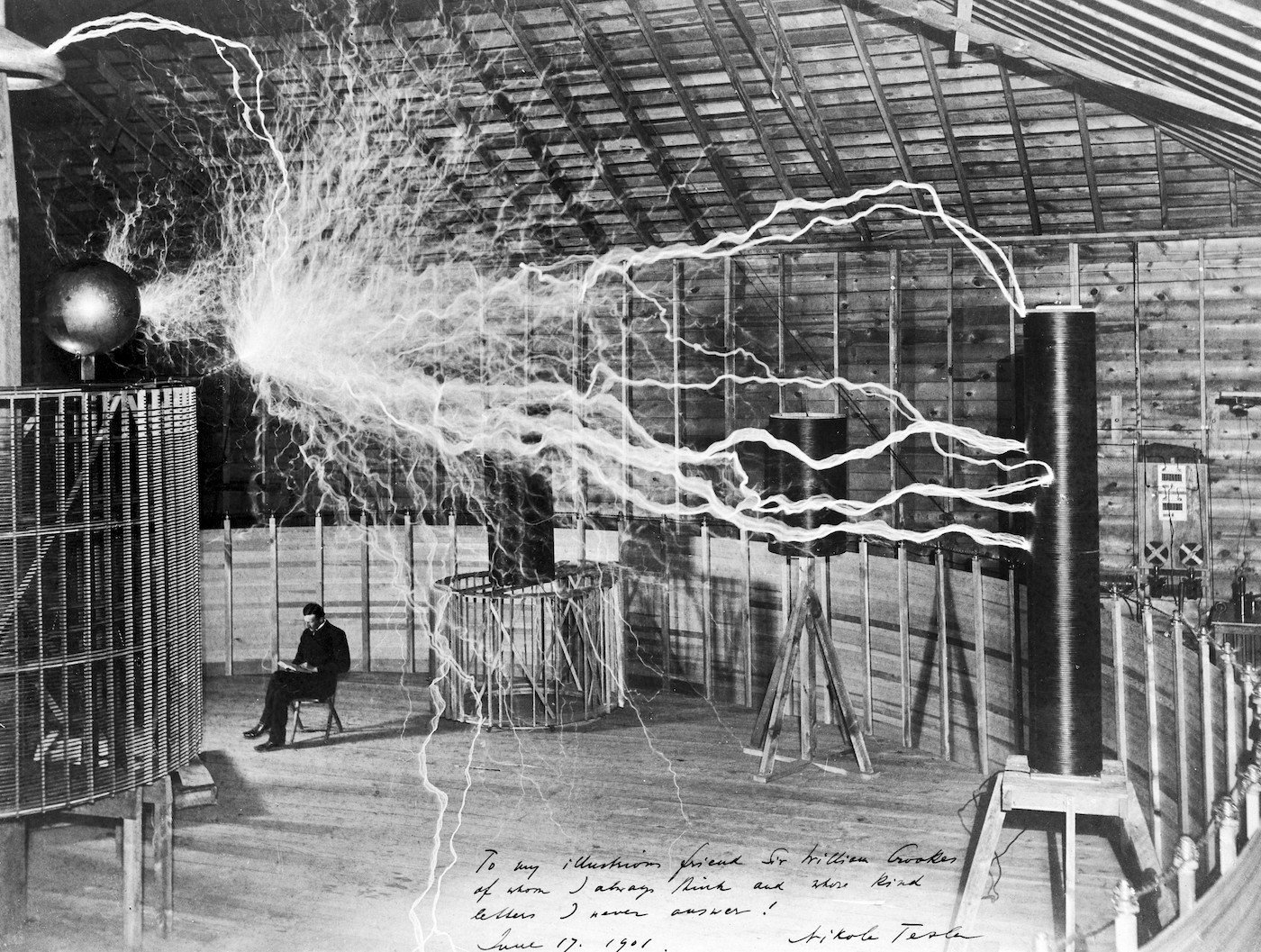
Tesla heard something. In 1899, Nikola Tesla was running huge radio experiments in Colorado Springs. He picked up rhythmic signals he believed came from beyond Earth. Believers say he was the first person to catch the Black Knight calling.
The echoes that came back late. In 1927, Norwegian radio amateur Jørgen Hals noticed something eerie. Signals from a Dutch shortwave station in Eindhoven came back as echoes about three seconds late. Physicist Carl Størmer and Dutch scientist Balthasar van der Pol looked into it, and the strange delays kept turning up into 1929. To theorists, a three-second delay meant a radio signal was bouncing off something far out in space.
A star map in the echoes. In April 1973, Scottish writer Duncan Lunan published a bold idea in Spaceflight, the magazine of the British Interplanetary Society. He plotted the 1920s echo delays on a chart and said they formed a star map. He read it as pointing to the double star Epsilon Boötis. In his reading, an alien probe parked near the Moon had been waiting for us since roughly 11,000 BC. That is where the famous "13,000 years old" figure comes from.
Satellites before Sputnik. In 1954, UFO author Donald Keyhoe told reporters the military had spotted two unknown satellites circling Earth. Papers including the St. Louis Post-Dispatch and San Francisco Examiner ran the story. That was three years before Sputnik, when no country on Earth could launch a satellite.
The dark satellite of 1960. In February 1960, Time magazine reported that the U.S. Navy had tracked a dark, unknown object in polar orbit. At first it was thought to be a Soviet spy satellite. Believers say it was the Black Knight, caught on radar.
An astronaut's sighting. A popular version of the story says astronaut Gordon Cooper saw a glowing object on his 15th orbit aboard Mercury 9 in 1963, and that ground stations tracked it too.
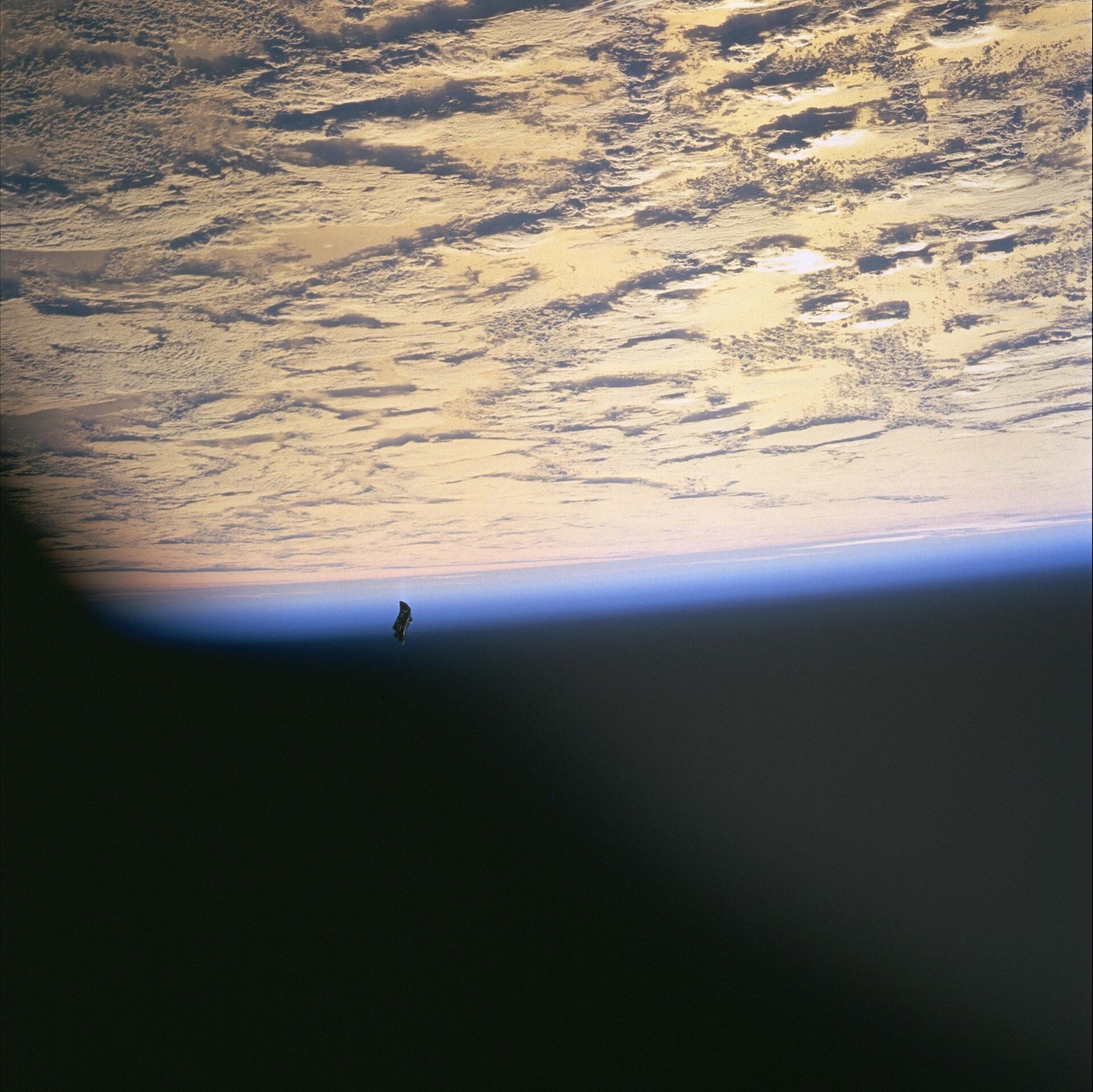
The photo. Then came December 1998. Crew on Space Shuttle Endeavour, building the first piece of the International Space Station, photographed a black, angular object tumbling above Earth. To believers, it finally showed the face of the Black Knight: a craft that looks built, not natural.
What scientists say
Researchers say these are separate events with separate answers, glued together after the fact. The Armagh Planetarium called the legend "a jumble of completely unrelated stories."
Tesla's signals: Skeptic Brian Dunning of Skeptoid points out that natural space radio sources exist. Pulsars, which send steady radio pulses, were first spotted in 1967. Tesla also did not know what he was hearing, and nobody has ever tied his signals to an object in orbit.
The late echoes: Long-delayed echoes are real, and ham radio operators still log them. But scientists have several natural explanations, mostly involving radio waves trapped and steered by layers of Earth's upper atmosphere and magnetic field. The cause is still debated, but no alien probe is needed.
Lunan's star map: Lunan himself withdrew it in 1976, laying out the problems with his own method. Skeptoid sums up his later view this way: the method was unscientific and contained outright errors. Lunan has also said the Black Knight legend has nothing to do with his work.
The 1954 satellites: These claims were never backed up. Skeptics note Keyhoe had a UFO book to promote and some coverage was tongue-in-cheek. Lunan adds that astronomer Clyde Tombaugh, who discovered Pluto, searched for small natural Earth satellites in the 1950s and found none.
The 1960 dark satellite: It was ours. The object turned out to be leftover hardware from Discoverer 8, a U.S. Air Force satellite launched November 20, 1959 that went into the wrong orbit. Discoverer was secretly part of the CORONA spy-satellite program. Its main body fell back to Earth on March 8, 1960.
The Cooper story: Mission transcripts contain no such report. According to Skeptoid, Cooper himself denied the story and pointed to his flight transcripts.
The 1998 photo: NASA's own photo catalog labels the frame "space debris." Former NASA engineer James Oberg traced it to a thermal cover meant to wrap a metal trunnion pin on the new Unity module. Spacewalker Jerry Ross lost hold of it during work with James Newman. Radar tracked it as object 25570, and it burned up in the atmosphere within days, not 13,000 years.
How one legend grew from many threads
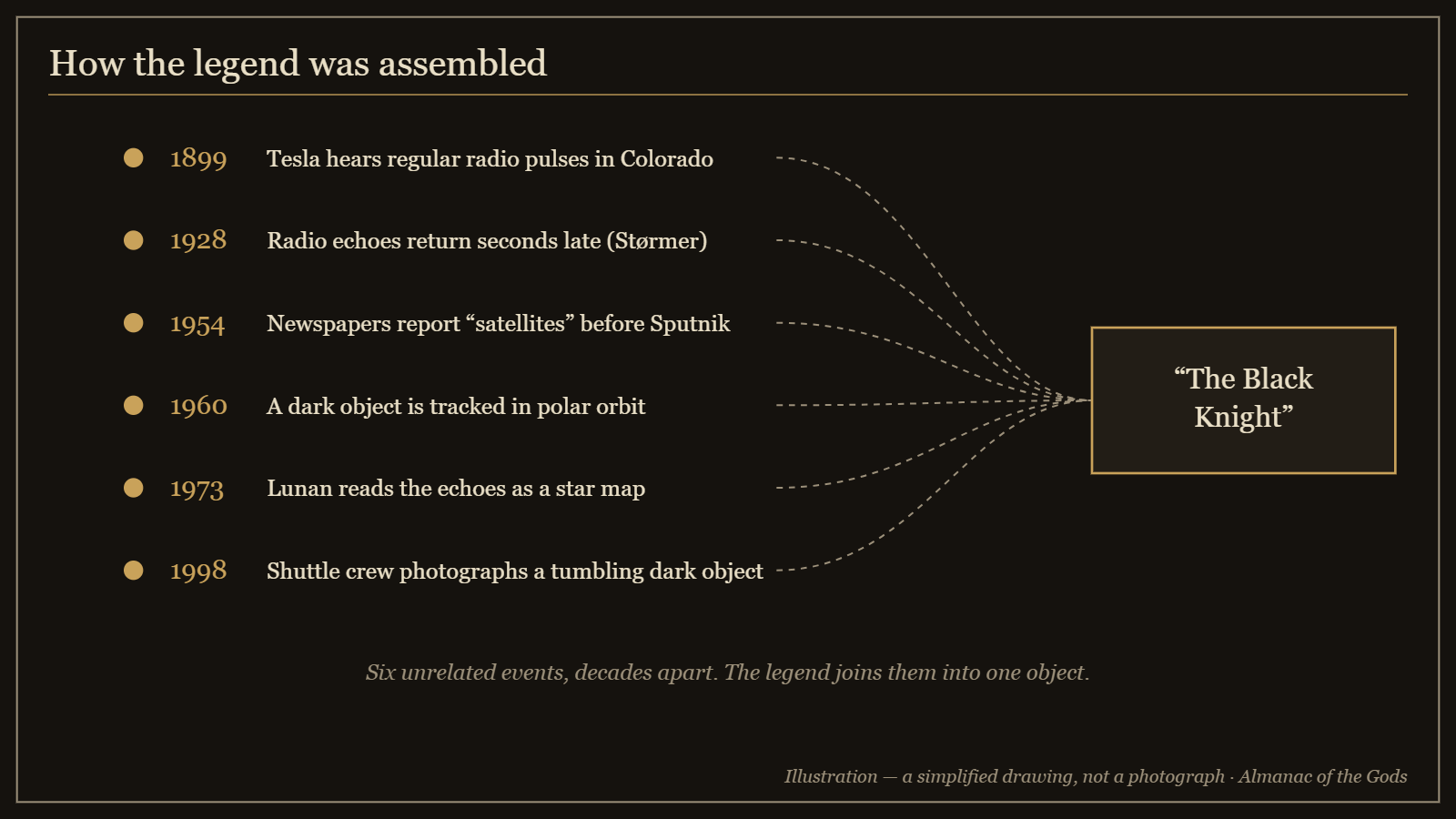
Look closely and the pieces span a century. A 1899 radio puzzle. A 1920s physics mystery. A 1950s publicity story. A Cold War spy satellite. A 1998 lost blanket.
None of the original sources say they found an alien satellite. The link between them was made later, mostly online, as the 1998 photos spread. That is the main reason scientists treat the Black Knight as modern folklore rather than a sighting.
Still, believers point out that real puzzles sit inside the legend. Long-delayed echoes still have no single agreed cause. That open question is what keeps the Black Knight circling.
Timeline
- 1899Tesla records odd, rhythmic radio signals at his Colorado Springs lab and suspects a source beyond Earth.
- 1927Jørgen Hals near Oslo hears echoes of Dutch station PCJJ arriving about three seconds late.
- 1928Hals, Carl Størmer and Balthasar van der Pol report the echoes in the journal Nature.
- 1954Donald Keyhoe tells newspapers the military has spotted two unknown satellites.
- 1957Sputnik 1 becomes the first real artificial satellite.
- 1958Britain's Black Knight rocket makes its first flight; the program runs until 1965.
- 1959Discoverer 8 launches on November 20 and lands in a stray, eccentric polar orbit.
- 1960Time reports a mystery "dark satellite"; it proves to be Discoverer 8 hardware.
- 1963Gordon Cooper flies Mercury 9; a UFO tale is later attached to his flight.
- 1973Duncan Lunan's Epsilon Boötis star-map article runs in Spaceflight.
- 1976Lunan withdraws his star-map reading.
- 1998Endeavour's STS-88 crew photographs a lost thermal cover tumbling in orbit.
- 2014James Oberg publishes his detailed breakdown of the STS-88 photos.
Still unanswered
- What exactly causes long-delayed radio echoes? Scientists have several candidate explanations but no final answer.
- What did Tesla actually hear in 1899? His notes describe the signals, but no recording survives to test.
- When and how did the British rocket's name get pinned to an alien satellite? No one has traced the first use.
Did you know?
- Duncan Lunan later revisited part of his Epsilon Boötis idea in 1998, using positional astronomy, but did not restore the original star map.
- Jerry Ross set a U.S. spacewalk record on STS-88, finishing his seventh spacewalk.
- Discoverer 8 was one of the first U.S. spy satellites. Its true mission stayed secret until 1995.
See it yourself
NASA's Gateway to Astronaut Photography lets anyone browse the original STS-88 frames. Search mission STS088, roll 724, and step through frames 66 onward to watch the object tumble from shot to shot.
You can also hear long-delayed echoes for yourself. Amateur radio operators still report them on the shortwave bands, and ham radio clubs are a good place to ask how to listen.
Sources
- Astronaut Photo STS088-724-66eol.jsc.nasa.gov
- STS-88 mission pagenasa.gov
- STS-88 and the "Black Knight" (James Oberg, 2014)jamesoberg.com
- Black Knight satellite conspiracy theorywikipedia.org
- Long delayed echowikipedia.org
- Duncan Lunanwikipedia.org
- Epsilon Boötis, Clyde Tombaugh, Black Knight and STS-88 (Duncan Lunan)theorkneynews.scot
- The Black Knight Satellite (Skeptoid)skeptoid.com
- Discoverer 8wikipedia.org
- The 'Black Knight' satellite: A hodgepodge of alien conspiracy theoriesspace.com
- The truth about the Black Knight satellite mysteryarmaghplanet.com
- Nikola Tesla in his laboratory (photographs by Dickenson V. Alley)publicdomainreview.org
Research notes: what we checked
- Ancient Aliens: Wikipedia's episode list gives titles and air dates only. No title names the Black Knight, so no episode could be verified as covering it and none is listed. "The Tesla Experiment" (S08E06) exists, but nothing on the list confirms it mentions the Black Knight.
- Orbiter name: James Oberg's 2014 PDF names the orbiter "Discovery" and Snopes repeats it. NASA's STS-88 page says Endeavour, so we use Endeavour.
- Photo date: NASA's photo catalog dates frame STS088-724-66 to December 11, 1998. Oberg's paper appears to give a different day, so the page says "December 1998".
- The "13,000 years" figure traces to Lunan's 1973 article. Lunan says his reading placed the probe's arrival around 11,000 BC, and Skeptoid gives about 12,600 years. We present 13,000 as the legend's number, not a measured age.
- Keyhoe: Space.com calls him an Air Force major. He was a retired Marine Corps major. The page avoids the rank and calls him a UFO author.
- The Gordon Cooper UFO story could not be traced to any original 1963 record. Wikipedia says there is no evidence for it, and Skeptoid says Cooper denied it. The story is presented only as a claim.
- Tesla's signals: the idea that they were natural space radio sources is Skeptoid's suggestion and is presented as that, not as a proven fact.
- The exact date of the 1960 Time issue was not confirmed; Wikipedia says February 1960.